Snow Built for Purpose
A mountain address is not a training specification. What matters is the terrain available to a particular athlete, the conditions attached to access and the people responsible for its operation.
Start with the discipline
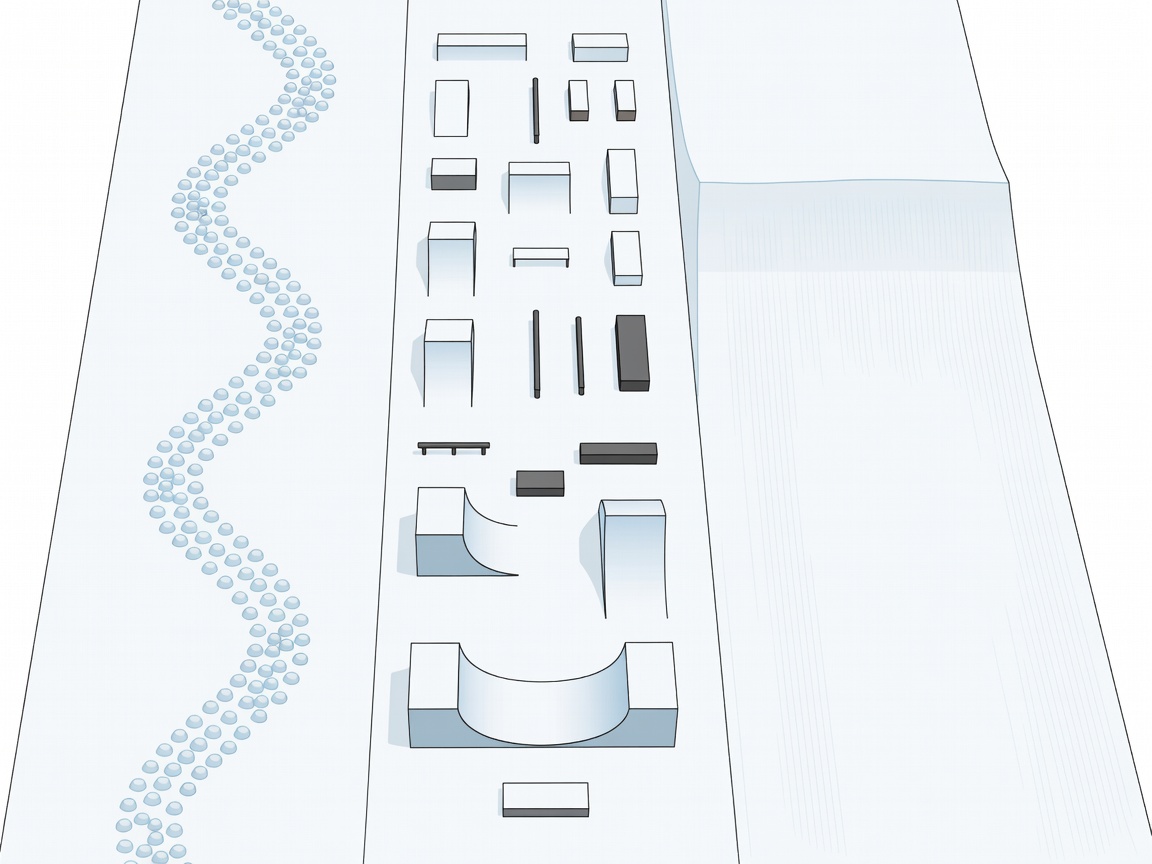
“Freestyle” can conceal very different environments. A mogul programme needs appropriate bump terrain and the operating arrangements around it. Aerials requires a specialist jump and landing setting. Halfpipe depends on a shaped pipe and sustained maintenance. Slopestyle combines multiple feature types, while ski cross uses a course with its own traffic and competition demands. A facility useful for one discipline is not automatically suitable for another, even when the same academy offers both.
Ask the provider to describe the snow setting in ordinary operational terms: where sessions happen, which areas are public, which are reserved and what the athlete can realistically use. FIS competition specifications are relevant to event infrastructure, but a reference to FIS does not establish that every training feature meets a competition standard or suits an individual athlete.
Separate access from ownership
An academy may operate its own area, book sessions from a resort or simply train within public terrain. Each arrangement creates different questions. Private access may give more control over scheduling, but it does not eliminate weather disruption. Public terrain may offer variety, but other users, queues and resort rules influence the session. Shared training lanes require clear arrangements for communication and interruptions.
Ask for the current agreement rather than relying on an image of an empty slope. Establish whether lift passes, training-area charges, transport and event closures are included. Find out who informs families when access changes and whether a replacement session is contractual or discretionary. Distinguishing these points early prevents an attractive location from becoming an assumed guarantee of provision.
Read maintenance as part of coaching capacity
Terrain is not a permanent object. Temperature, snowfall, wind and repeated use change the working environment. Grooming and feature maintenance need staff, equipment and time. The useful question is not whether an academy advertises excellent snow, but how it responds when the setting changes. Who inspects the area? Who can stop the session? How are athletes told that a feature or landing area is unavailable?
Examples such as Laax, Ruka, Tignes and Cardrona illustrate the variety of mountain settings associated with freestyle skiing. They are not interchangeable products, and naming them does not establish the current availability of any specific facility. Elevation, season, local operations and event calendars all affect access. Verify the actual academy programme against current resort information, not a previous season’s promotional footage.
Look at the day around the terrain
Training time is only one part of a snow day. Transport, lift travel, changing facilities, food, warm indoor space and communication all influence how the programme functions. For younger athletes, establish where supervision begins and ends, who is responsible during transfers and how a parent receives updates after an interruption. An independently travelling adult may need different arrangements, but still benefits from a clear meeting and cancellation process.
Emergency planning should be specific to the place. Ask about patrol contact, evacuation arrangements and the division of responsibility between the academy and mountain operator. A general first-aid statement is not a complete emergency plan. Insurance requirements, including discipline-specific exclusions, should be checked with the insurer rather than inferred from a provider’s reassurance.
Compare the setting, not the scenery
| Environment | Useful evidence | Operating limitation |
|---|---|---|
| Mogul or dedicated lane | Access schedule, maintenance responsibility, group allocation | Snow condition and shared-lane restrictions |
| Park or halfpipe | Current feature availability and operator rules | Public traffic, shaping and weather closures |
| Aerial site | Specialist supervision and site operating arrangements | Readiness, landing conditions and restricted access |
| Ski cross course | Session control and course-use permissions | Event use, course changes and traffic management |
Keep the evidence current
A productive visit should produce clearer expectations, not an informal promise of results. Record the date of the information, the person who supplied it and any conditions. Recheck material arrangements before paying for a season or travelling internationally. If snow access becomes unavailable, ask how alternative work connects to the programme without treating an off-snow session as an identical replacement.
Use the FIS website for current competition documents and the relevant resort or operator for local operating information. Then read Before the Snow Landing to distinguish preparation facilities from the snow environment they are intended to support.