Looking Beyond the Feature
An academy is a system of access, people, services and obligations. Compare that system against a real athlete’s needs before comparing its most photogenic facility.
Define the requirement before the shortlist
Start with the athlete’s discipline, current development context, education needs and practical constraints. A programme designed around one event group may not fit another, even if both use the word freestyle. Consider season length, travel tolerance, language, accommodation and the level of independence expected. The strongest reputation cannot compensate for a programme that does not match the athlete’s actual circumstances.
Write down the non-negotiables separately from preferences. Reliable school coordination may be essential; a particular resort may simply be attractive. Ask the athlete what makes communication workable and what concerns they would want to raise privately. This is not an exercise in forecasting results. It is a way to decide which questions deserve a clear answer before money, travel and education arrangements become difficult to change.
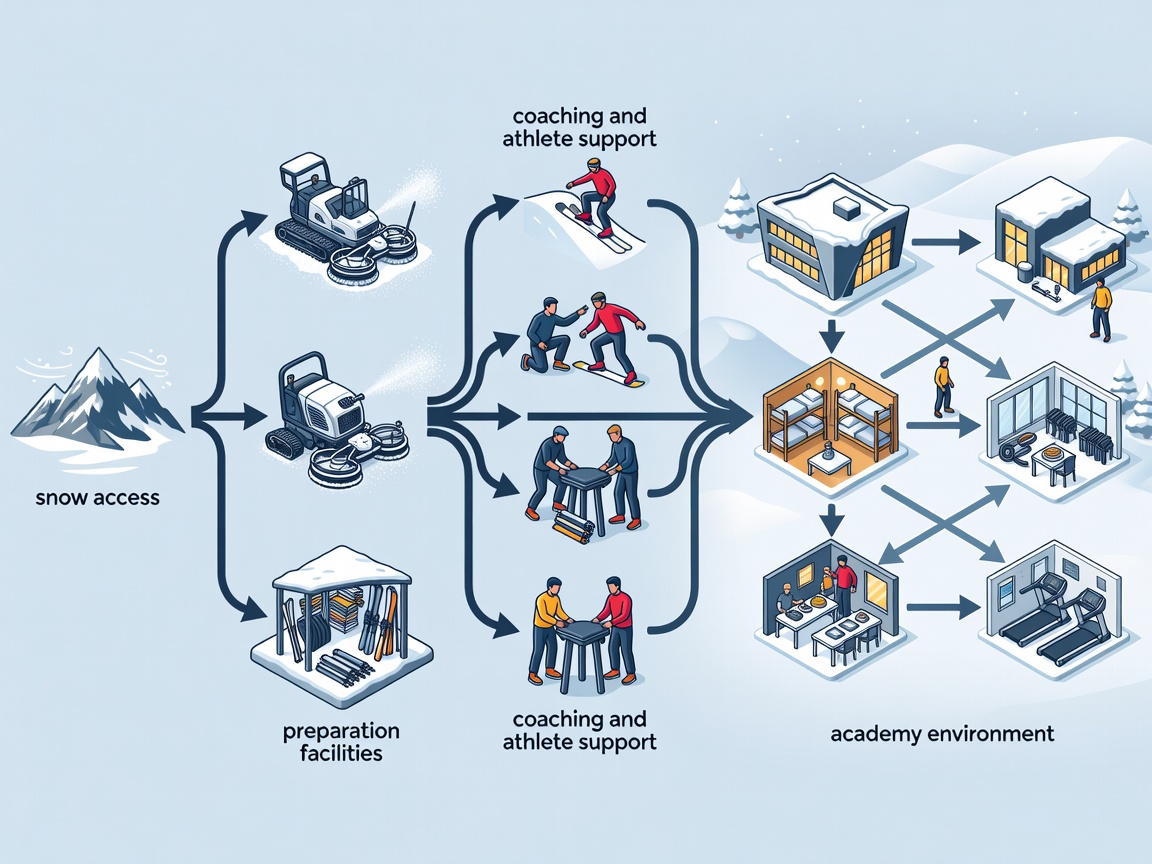
Ask for evidence in a usable form
A clear provider can distinguish current provision from future ambitions. Request the training calendar, access arrangements, named staffing structure and the documents governing participation. If a facility is external, ask whether an agreement already exists and what happens if availability changes. A proposed partnership should not be presented as a confirmed service. Keep dated notes so that later conversations can resolve differences rather than rely on memory.
Claims involving organisations such as GB Snowsport, Swiss-Ski, Snow Australia or the International Olympic Committee require precision. Sponsorship, event participation, national-team selection and formal accreditation are different relationships. Ask what the claim means and verify it with the relevant body when it influences your decision. An Olympic image or a coach’s past result is not evidence that a current academy has institutional approval.
Use criteria without inventing a universal score
| Criterion | Request | Unresolved question |
|---|---|---|
| Snow and preparation access | Written schedule, access terms and facility operator details | Which sessions depend on third-party availability? |
| Supervision | Named roles, relevant competence and absence cover | Who makes stop or cancellation decisions? |
| Welfare and services | Safeguarding contacts and service delivery boundaries | What is referral only or charged separately? |
| Full-season cost | Itemised fees, travel assumptions and exclusions | What changes if events or facilities are cancelled? |
| Exit and disruption | Withdrawal, complaint and refund terms | What happens after injury or a prolonged closure? |
A numerical total can create false precision when missing information is treated as an average score. Instead, mark each criterion as evidenced, conditional or unresolved, and record why it matters to this athlete. Some uncertainties may be acceptable; others may prevent a responsible commitment. The aim is a transparent decision, not a league table that hides individual priorities.
Read the full cost and the contract together
Base tuition is only part of the commitment. Check lift passes, specialist facility fees, accommodation, meals, transport, competition travel, equipment and external professional appointments. Ask which costs are fixed and which depend on participation. Currency changes and international travel can complicate comparisons, so use the same assumptions for each provider rather than comparing headline figures with different inclusions.
Review deposits, payment dates, cancellation rules, injury-related absence and the treatment of substituted sessions. Understand who contracts with whom, particularly when accommodation or training is supplied by another business. A verbal willingness to be flexible is not the same as a contractual right. Seek independent legal or financial advice where the commitment or wording warrants it; this manual does not assess individual contracts.
Visit the operating environment, not just the showcase
A normal session can reveal more than a promotional event. With permission and without disrupting athletes, observe how arrivals, briefings, waiting time and changes are managed. Ask how families receive updates and how athletes give feedback. Respect privacy: do not film other participants or request confidential health and welfare details as evidence of transparency.
Speak to current and former families where possible, remembering that experiences vary and references may be selected. Ask about ordinary delivery rather than only competition results. A useful account explains whether communication was timely, costs were understood and concerns were handled fairly. Medal histories cannot tell you how an academy will respond to a transport problem, school conflict or prolonged period away from snow.
Finish with a written decision record
Summarise the chosen programme, remaining conditions and the evidence relied upon. Reconfirm time-sensitive details before paying or travelling. If an academy cannot answer a material question, record that gap rather than filling it with optimism. Selection should leave the athlete and family with a realistic understanding of responsibilities, constraints and routes for raising concerns—not a belief that any environment guarantees progression.
Return to the snow guide, preparation guide and athlete services guide for the underlying distinctions. The FAQ addresses common uncertainties without replacing direct checks with the provider.